

A decade ago, business IT support was often associated with a familiar routine: something stopped working, someone reported the problem, and a technician fixed it. That reactive approach is becoming increasingly difficult to sustain. Businesses now depend on interconnected devices, cloud applications, remote employees, networks, cybersecurity controls, data platforms, and digital communication tools throughout the working day.
As dependence on technology grows, the cost of waiting for something to fail grows with it. This is pushing managed IT support and maintenance solutions toward a more proactive model focused on monitoring, prevention, security, automation, and long-term technology performance. The objective is no longer simply to repair malfunctioning systems. Modern support increasingly aims to identify warning signs, reduce disruption, and keep technology aligned with business requirements.
The future of IT support will therefore be defined less by how quickly technicians respond after failure and more by how effectively organizations can prevent avoidable problems from interrupting work in the first place.
Managed IT Support Is Moving From Reactive to Preventive
Traditional break-fix support follows a straightforward sequence. A problem occurs, employees report it, and technical teams begin troubleshooting. The weakness is that business disruption has already started before support becomes involved.
A preventive approach changes the sequence. Instead of relying entirely on users to notice problems, IT teams can continuously monitor system health, device performance, storage capacity, network behavior, update status, and other indicators.
This makes early intervention possible. A system showing signs of resource exhaustion, repeated errors, or unusual behavior can receive attention before the issue becomes a complete failure.
Preventive support does not mean that unexpected problems disappear. Hardware can still fail, applications can malfunction, and users can encounter unusual issues. The difference is that routine and predictable problems can increasingly be addressed before they create widespread disruption.
Automation Is Changing Everyday IT Maintenance
A significant amount of IT maintenance consists of repetitive work. Systems need updates, routine checks must be performed, alerts need to be reviewed, and common issues often require the same sequence of actions.
Automation can handle some of these activities consistently and at scale.
For example, routine maintenance tasks can be scheduled according to predefined rules rather than relying on technicians to initiate every action manually. Systems can also generate alerts when performance moves outside expected ranges, allowing technical teams to focus on exceptions.
The benefit extends beyond speed. Standardized automation can reduce variation in repetitive processes and create clearer records of what was performed and when.
However, automation requires oversight. A poorly designed automated process can repeat an incorrect action across many devices much faster than a person could. Successful IT maintenance therefore combines automation with monitoring, testing, and appropriate human approval for higher-risk changes.
Artificial Intelligence Will Make Support More Predictive
Artificial intelligence is likely to play an increasingly important role in managed IT services because modern environments produce enormous amounts of operational information.
AI can analyze logs, alerts, support histories, performance patterns, and recurring incidents to help identify relationships that might be difficult for technicians to spot manually.
Suppose a particular sequence of minor warnings regularly occurs before an application becomes unavailable. An intelligent monitoring system may eventually recognize that pattern and alert the support team before the larger incident develops.
AI can also assist with troubleshooting. Instead of manually searching through previous tickets and documentation, technicians may be able to retrieve similar cases and likely causes more quickly.
The goal should not be to remove experienced IT professionals from decision-making. AI is more valuable as a way of narrowing possibilities, prioritizing information, and reducing time spent on repetitive investigation.
Remote and Hybrid Work Are Redefining the IT Perimeter
The traditional workplace made IT management comparatively straightforward. Employees, computers, servers, and network infrastructure were often located within the same physical environment.
Modern businesses are far more distributed.
Employees may work from offices, homes, shared spaces, or while traveling. They may access business systems from different networks and approved devices. Applications and data may also be distributed across cloud and on-premises environments.
This means IT support can no longer focus solely on equipment located inside an office.
Maintenance strategies need to consider remote access, endpoint health, identity controls, connectivity, software configuration, and secure access to business resources. Support also needs to work effectively when a technician cannot physically sit beside the user experiencing the problem.
Remote management capabilities are consequently becoming a core part of modern IT support rather than an optional convenience.
Cybersecurity and IT Maintenance Are Becoming Closely Connected
Security can no longer be treated as a completely separate activity from everyday IT maintenance.
Outdated software, weak configurations, unmanaged devices, excessive access permissions, and neglected updates can all increase security exposure. Routine maintenance therefore has direct implications for cybersecurity.
Modern managed support increasingly incorporates security-related tasks into regular operations. This may include maintaining updates, reviewing device status, supporting access controls, monitoring unusual activity, and ensuring important systems are configured according to organizational requirements.
The relationship works in both directions. Security events can also reveal maintenance weaknesses. Repeated authentication problems, unsupported software, or unmanaged endpoints may indicate broader operational issues that require attention.
As threats continue changing, businesses will need support models that view reliability and security as connected objectives rather than separate technical responsibilities.
Cloud Environments Require a Different Kind of Maintenance
Moving applications and infrastructure to the cloud does not eliminate maintenance. It changes what needs to be maintained.
Businesses may no longer manage every physical server directly, but they still need to consider user access, configurations, integrations, backups, permissions, application performance, costs, and service availability.
Cloud environments can also change quickly. New resources can be added easily, which is useful for growth but can gradually create unnecessary complexity if environments are not reviewed.
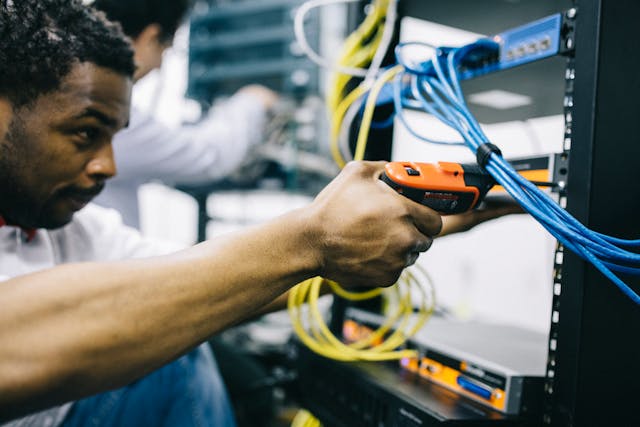
Modern IT maintenance therefore includes ongoing visibility into how cloud resources are being used. Teams need to identify unnecessary services, configuration inconsistencies, access issues, and potential dependencies before they become operational problems.
The future of managed support will increasingly involve coordinating multiple environments rather than maintaining one clearly defined collection of office-based systems.
Endpoint Management Will Become More Important
Every connected endpoint can influence productivity and security. Laptops, desktops, mobile devices, and other business systems need to remain appropriately configured and maintained.
Managing endpoints individually becomes difficult as organizations grow.
Centralized monitoring and management can give support teams a clearer picture of device health. Instead of discovering an outdated or poorly performing device only after an employee complains, teams can identify issues across the wider environment.
This visibility also improves lifecycle planning. Devices that repeatedly experience performance problems may need more than another temporary fix. Maintenance records can help determine when repair is still reasonable and when replacement should be considered.
This shifts endpoint management from a series of isolated technical incidents toward longer-term asset management.
Support Desks Will Become More Intelligent
The IT support desk is another area likely to change substantially.
Many requests are repetitive. Employees forget passwords, experience connectivity problems, need software access, or encounter issues that have already been resolved for other users.
AI-assisted support systems can help classify requests, identify urgency, retrieve relevant documentation, and suggest possible solutions. Straightforward requests may be resolved through guided self-service, while more complicated issues can be routed to the appropriate technician.
Better classification can also improve response times. A critical outage affecting many employees should not compete for attention with a low-priority request that has little immediate business impact.
Automation can handle routine interactions, but easy access to human support remains important. Users should not become trapped in automated processes when their problem is unusual, urgent, or difficult to explain.
Business Continuity Will Become Part of Everyday IT Planning
Organizations increasingly recognize that technology availability is directly connected to their ability to operate.
A major outage can interrupt communication, customer service, transactions, internal workflows, and access to important information. IT maintenance therefore needs to consider not only whether individual systems work today but also how the business will respond if something fails tomorrow.
Backups, recovery planning, system redundancy, documentation, and incident-response procedures all contribute to resilience.
These measures need to be tested rather than simply assumed to work. A backup provides limited protection if information cannot be restored when required. Similarly, an incident plan has limited value if responsibilities are unclear during an actual disruption.
Future managed IT support will increasingly treat resilience as an ongoing operational responsibility instead of a document reviewed only after a serious incident.
IT Decisions Will Become More Data-Driven
Support teams generate large amounts of information through tickets, alerts, maintenance records, performance monitoring, and asset histories. Historically, much of this information has been used to solve individual incidents and then forgotten.
That is beginning to change.
Businesses can analyze recurring problems to understand where technology is creating unnecessary cost or disruption. If the same type of incident repeatedly affects a department, fixing individual tickets may not address the underlying cause.
Data can also reveal which devices require disproportionate support, which applications generate recurring problems, and where employees frequently need assistance.
This allows managed IT support to move beyond incident resolution. Technical information becomes useful for budgeting, technology planning, training, and decisions about upgrades or replacements.
IT Support Will Need to Focus More on Business Outcomes
One of the most important changes may be how IT performance itself is measured.
Closing a large number of support tickets does not necessarily mean technology is serving the business well. A company might have fast ticket resolution while employees continue experiencing the same preventable problems.
Modern businesses need broader measures. System availability, recurring incident rates, employee downtime, security readiness, technology costs, and user experience can provide a better understanding of support quality.
This shifts the conversation from technical activity to business impact.
Instead of asking only how quickly a problem was fixed, organizations can ask why it happened, whether it could have been prevented, what productivity was lost, and what changes could stop it from recurring.
That approach makes IT support part of operational strategy rather than simply a technical expense.
The Future Is Proactive, Connected, and Adaptable
Managed IT support is evolving because the technology environment it serves has changed. Businesses now operate across cloud platforms, remote workplaces, connected endpoints, digital workflows, and increasingly complex security requirements.
Support models built primarily around waiting for something to break are becoming less suitable for that environment.
The next generation of IT maintenance will rely more heavily on continuous monitoring, intelligent automation, predictive analysis, centralized endpoint management, stronger security practices, and data-driven planning. Routine issues can increasingly be identified and resolved earlier, while skilled professionals focus their attention on complex problems and strategic decisions.
Technology will not eliminate the need for human IT expertise. If anything, increasing complexity makes knowledgeable professionals more important. Their role, however, is shifting from repeatedly repairing individual problems toward designing and maintaining environments that experience fewer preventable failures.
For modern businesses, that shift can have consequences far beyond the IT department. Reliable technology supports employee productivity, customer service, security, communication, and business continuity.
The future of managed IT support is therefore not simply about better maintenance tools. It is about building technology operations that are prepared to detect problems earlier, adapt to changing business requirements, and keep essential systems working with as little disruption as possible.