
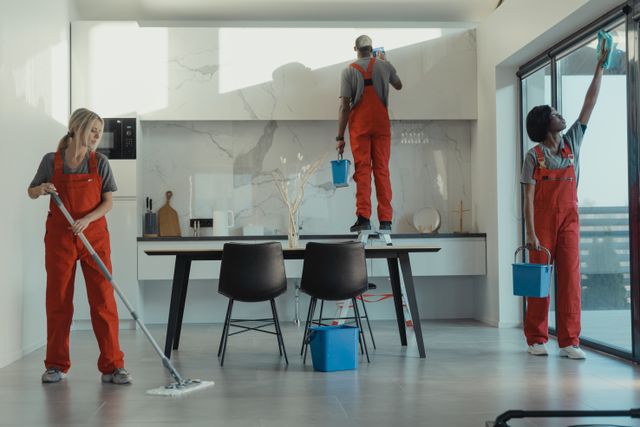
Cleaning has traditionally been straightforward: identify what is dirty, clean it, and repeat the process according to a schedule. That basic purpose is not going away, but the way homes and commercial properties are cleaned is beginning to change. New technology, different expectations around indoor environments, sustainability concerns, and smarter ways of managing buildings are influencing what effective cleaning looks like.
For homeowners, the change may mean cleaning routines that are easier to manage and better matched to how a household actually lives. In commercial properties, it can mean moving away from rigid schedules toward cleaning decisions based on occupancy, traffic, and the condition of individual spaces.
The future of cleaning is unlikely to be defined by machines replacing every traditional task. Instead, technology and better information can help people decide what needs attention, when it needs it, and which methods make the most sense. Cleaning is becoming less about following the same checklist every day and more about responding intelligently to the spaces people actually use.
Cleaning Schedules Will Become More Responsive to Real Use
Traditional cleaning schedules are usually based on time. A particular room is cleaned every morning, floors are handled on certain days, and specific tasks are completed weekly or monthly regardless of how heavily an area has actually been used.
That approach is predictable, but it is not always efficient.
Consider a commercial building with several meeting rooms. One room might host people throughout the day while another remains empty. Cleaning both to exactly the same extent simply because they appear on the same checklist can waste time and resources.
Occupancy information, foot-traffic monitoring, booking systems, and other building data can help cleaning teams understand how spaces are being used. A busy lobby may need additional attention during certain hours, while an unused conference room may require only a quick inspection.
Homes can follow a simpler version of the same principle. Instead of treating every room equally, households can concentrate routine cleaning on kitchens, bathrooms, entrances, living areas, and other frequently used spaces.
The future is therefore likely to involve cleaning according to need rather than relying entirely on the calendar.
AI Will Help Organize Cleaning Rather Than Simply Perform It
Artificial intelligence is often associated with physical automation, but some of its most practical uses in cleaning may happen behind the scenes.
AI can help analyze schedules, property information, staffing, recurring maintenance needs, supply use, and service records. For commercial cleaning operations, this could make it easier to coordinate teams across large buildings or multiple locations.
It may also help identify patterns that are difficult to notice manually. If certain areas repeatedly require extra attention after particular events or during certain seasons, historical data can help anticipate that demand.
For residential cleaning businesses, AI could support appointment scheduling, route planning, customer communication, estimates, and reminders. Clients may receive more accurate arrival information while cleaning teams spend less time coordinating routine administrative tasks.
AI does not need to decide whether a particular surface is properly cleaned. Human inspection and judgment remain important. Its value lies in processing information quickly so cleaners and property managers can make better decisions about where their effort is needed.
Automated Equipment Will Handle More Repetitive Tasks
Cleaning involves many repetitive physical activities, making it a natural area for automation. Automated equipment is already capable of handling some routine floor-care tasks, and these systems are likely to become more capable over time.
Large commercial environments provide an obvious opportunity. Warehouses, shopping areas, airports, offices, educational buildings, and other properties may contain extensive open floor areas that require frequent cleaning.
Allowing automated equipment to handle predictable routes can free workers to concentrate on tasks that require greater attention to detail. Restrooms, corners, stairs, furniture, touchpoints, irregular surfaces, and unexpected spills still require flexible human decision-making.
Residential environments present an even greater challenge for complete automation. Homes contain furniture, toys, cords, pets, stairs, narrow areas, changing layouts, and many different surface types.
For that reason, the future is more likely to involve collaboration between people and automated equipment than completely autonomous cleaning. Machines can handle certain repetitive jobs while cleaners concentrate on tasks requiring adaptability.
Commercial Cleaning Will Become More Data-Driven
Large commercial properties generate increasing amounts of information about how buildings are used. Cleaning operations can benefit from some of that data.
Traffic information can indicate which entrances and corridors receive the most use. Room booking data can show which meeting spaces have been occupied. Supply monitoring can help identify when restroom or hygiene products need replenishment.
When these signals are combined, cleaning becomes more responsive.
A team might prioritize a restroom that has experienced unusually heavy traffic rather than visiting every facility according to an identical schedule. Similarly, a conference area used for a large event could be automatically added to the cleaning team’s priorities afterward.
This approach can improve resource allocation without lowering standards. In fact, it may allow cleaners to spend more time where cleaning is genuinely required.
Human observation will remain important because data does not capture everything. A sensor may indicate that a room was barely occupied, but someone could still have spilled a drink or created another issue requiring immediate attention. Technology can guide the process, while inspection confirms what actually needs to be done.
Expectations Around Indoor Environments Will Keep Growing
People increasingly pay attention to the quality of indoor spaces, particularly because so much daily life happens inside buildings. Cleaning will continue to be part of a larger discussion that includes ventilation, moisture control, indoor air quality, building maintenance, and occupant comfort.
Dust management is one area likely to receive greater attention. Cleaning practices that simply move dust from one surface to another are less useful than methods designed to capture and remove it effectively.
The same applies to moisture. Repeatedly cleaning visible discoloration without addressing an underlying leak or humidity problem does not solve the cause. Cleaning professionals and property managers may increasingly need to recognize when an issue falls outside routine cleaning and requires maintenance or specialist attention.
Product selection will also remain important. Strong chemical odors are not necessarily evidence of better cleaning, and unnecessary chemical use can introduce its own concerns.
Future cleaning practices are likely to focus more on matching the method to the actual problem rather than automatically using the strongest available approach.
Sustainability Will Influence How Cleaning Products Are Used
Environmental concerns are changing how many industries think about materials and waste, and cleaning is no exception.
Cleaning operations use chemicals, water, electricity, disposable materials, containers, and transportation. Each creates opportunities to reduce unnecessary consumption.
One straightforward improvement is more accurate product dosing. Using significantly more cleaning solution than necessary does not guarantee better results. It can increase costs, create additional residue, and cause supplies to run out faster.
Concentrated products and refill systems may also reduce packaging in appropriate situations. Reusable cleaning materials can replace certain disposable items when they can be cleaned and maintained properly.
Water use is another consideration, particularly in large commercial cleaning operations. Equipment and processes that achieve effective cleaning with less unnecessary water can make routine maintenance more efficient.
Sustainability does not mean reducing cleaning standards. The objective is to achieve the required result while avoiding waste that contributes nothing to cleanliness.
Cleaning Products May Become More Specialized
The idea of one powerful cleaner being suitable for almost every surface is gradually giving way to a more informed approach.
Modern buildings contain a wide range of materials, including natural stone, engineered flooring, wood, glass, metal, painted surfaces, textiles, and specialized finishes. A method that works well on one material may damage another.
As materials become more varied, cleaning practices will need to become more precise. Product choice can increasingly be based on the type of soil being removed, the surface underneath it, and the conditions in which cleaning is taking place.
This can help protect finishes and extend the useful life of building materials.
Training will therefore remain important even as technology advances. Cleaners need to understand why particular methods are appropriate rather than simply following instructions without considering the surface.
Smarter cleaning is not necessarily stronger cleaning. Often, it means using the least aggressive method capable of completing the task properly.
Residential Cleaning Will Become More Personalized
No two households create exactly the same cleaning demands. A family with young children may have very different priorities from a single-person household. Pets, cooking habits, flooring, outdoor conditions, allergies, work arrangements, and the number of occupants can all influence how quickly different areas become dirty.
Future residential cleaning services may become increasingly tailored around these patterns.
Instead of providing exactly the same checklist at every visit, cleaning plans can focus more heavily on areas receiving the greatest use. A household that cooks frequently may need more kitchen attention, while a home with pets may prioritize floors, furniture, and areas where hair tends to collect.
Remote and hybrid work also change household patterns. Home offices and kitchens may now experience considerably more daytime use than they did when residents spent most working hours elsewhere.
Personalization does not need to make cleaning complicated. It simply recognizes that an effective routine should follow the household rather than forcing every home into the same template.
Professional Cleaners Will Still Be Essential
Automation inevitably raises questions about whether human cleaners will eventually become unnecessary. The reality of cleaning makes complete replacement unlikely.
Real environments are unpredictable.
A cleaner may encounter an unfamiliar stain, damaged surface, overflowing bin, blocked area, fragile object, pet accident, maintenance problem, or unexpected clutter. Determining what happened and choosing an appropriate response often requires judgment.
Detailed cleaning also involves areas that automated equipment may struggle to reach. Corners, fixtures, furniture, stairs, irregular surfaces, shelves, kitchens, bathrooms, and crowded rooms require physical flexibility.
Human cleaners can also notice things that do not fit neatly into a cleaning checklist. A recurring water stain, unusual odor, damaged flooring, or leaking fixture may indicate a maintenance issue that needs to be reported.
Technology can reduce repetitive work and provide better information, but the ability to interpret real-world conditions remains valuable. The future cleaner may work with more sophisticated tools rather than being replaced by them.
Cleaning Teams May Need New Skills
As cleaning technology develops, the skills required within the industry are likely to broaden.
Traditional knowledge about surfaces, products, equipment, and cleaning methods will remain important. Alongside it, workers may increasingly interact with automated equipment, digital work orders, building-management systems, sensors, and scheduling platforms.
Supervisors may use data to allocate work across a property. Cleaners may receive updated task lists based on building usage rather than following identical paper checklists every shift.
Equipment troubleshooting could also become more relevant as automated systems become common.
This does not mean every cleaner needs to become a technology specialist. Tools should ideally make work simpler rather than create unnecessary complexity. However, training will need to keep pace with the equipment and systems being introduced.
The industry’s future therefore depends as much on investing in people as it does on investing in machines.
Customers Will Expect Greater Transparency
Technology is also changing what homeowners and commercial clients expect from service providers.
Customers increasingly want clear scheduling, straightforward communication, and an understanding of what work has been completed. Commercial property managers may require documentation across large facilities, while homeowners may simply want reliable arrival information and clarity about the tasks included in a visit.
Digital records can make this easier.
Cleaning teams may be able to document completed work, note unusual conditions, report maintenance concerns, and communicate changes without relying on scattered messages or paper records.
For larger properties, this creates useful accountability. Managers can understand which areas have been serviced and identify recurring problems.
Transparency should not become excessive monitoring of individual workers. The purpose of digital documentation should be improving coordination and service consistency, not turning every movement into a performance measurement.
The Future Will Focus on Cleaning Smarter, Not Simply Cleaning More
The future of residential and commercial cleaning will not necessarily involve more frequent cleaning or stronger products. In many cases, it will involve making better decisions about where, when, and how cleaning happens.
Homes can benefit from routines that reflect the people, pets, activities, and surfaces within them. Commercial properties can use occupancy information and smarter scheduling to direct cleaning resources toward the spaces receiving the most use.
Automation can take over selected repetitive tasks. AI can organize information and improve planning. More precise methods can reduce unnecessary product, water, and material use. At the same time, trained cleaners will remain central because buildings are complex environments that constantly present situations requiring human judgment.
The result may be a cleaning industry that becomes more technologically advanced without losing sight of its basic purpose.
A clean space should be comfortable to use, practical to maintain, and cared for according to what actually happens inside it. The tools may change considerably in the years ahead, but that goal will remain the foundation of both residential and commercial cleaning.