
Construction has always reflected the priorities of its time. Homes once focused mainly on shelter and practicality, while commercial buildings were designed around fixed workplace routines and predictable patterns of use. Those expectations are changing. Property owners now think about energy costs, changing technology, flexible spaces, environmental pressures, maintenance requirements, and how a building might need to function years after construction is complete.
For a commercial and residential construction company, this shift is changing the conversation from simply completing a structure to preparing that structure for what comes next. The future of construction is not defined by one futuristic material or automated system. It is taking shape through smarter planning, adaptable layouts, better use of information, improved efficiency, and buildings that can respond to changing needs without requiring constant major renovations.
Future-Ready Construction Begins Before the First Wall Goes Up
Some of the most important decisions about a building’s future happen long before construction begins. Site orientation, structural layouts, mechanical planning, utility placement, material selection, drainage, electrical capacity, and room configuration can influence how easily a property adapts later.
This matters because predicting exactly what a homeowner, business, tenant, or community will need in 15 or 20 years is nearly impossible. A better strategy is to create buildings that leave room for change. Instead of trying to predict every future trend, construction planning can focus on flexibility, accessibility, durability, and systems that are easier to modify.
For commercial properties, this might mean designing spaces that can accommodate different tenant layouts or changing workplace requirements. In residential construction, it could mean planning rooms that can serve as bedrooms, offices, study spaces, hobby areas, or accessible living spaces at different stages of life.
Future-ready construction therefore starts with asking a different question. Rather than asking only, “What does this building need today?” project teams increasingly need to ask, “How difficult will this building be to change tomorrow?”
Flexible Spaces Could Become More Valuable Than Specialized Ones
For decades, many buildings were designed around highly specific functions. Offices contained rows of fixed workstations, retail properties followed predictable customer patterns, and houses were divided into rooms with clearly defined purposes. Modern lifestyles have made those assumptions less reliable.
Remote and hybrid work have already demonstrated how quickly the purpose of a room can change. A spare bedroom may become an office, while a commercial floor might need to support collaborative work, private meetings, temporary workstations, or entirely different tenants. Designing spaces with fewer unnecessary permanent restrictions can make those transitions easier.
This does not mean every building should become an empty box. Instead, thoughtful construction can create defined spaces while preserving the ability to modify them. Accessible service areas, sensible structural grids, carefully positioned utilities, and adaptable partitions can reduce the difficulty of future renovations.
That flexibility may also affect long-term property value. A building capable of serving several uses can remain practical even as occupant expectations change. In that sense, adaptability is becoming a form of durability—not durability of materials alone, but durability of purpose.
Technology Will Move Deeper Into the Construction Process
Digital tools are becoming increasingly useful before, during, and after construction. Planning teams can work with more detailed digital models, project information can be shared more efficiently, and site progress can be documented with greater accuracy. Over time, these capabilities are likely to become normal parts of construction rather than specialist additions.
Artificial intelligence may also support scheduling, estimating, risk identification, documentation, and project coordination. Its greatest value may not come from replacing construction expertise but from processing information that would otherwise take people considerable time to review. Experienced professionals will still need to interpret conditions, make practical decisions, manage trades, and respond to the unexpected realities of a construction site.
The buildings themselves are also becoming more technology-dependent. Electrical loads, connectivity requirements, automated controls, security systems, energy monitoring, and future device installations all place new demands on infrastructure. A property designed only around today’s minimum technology requirements could become difficult or expensive to update.
Forward-looking construction therefore requires some allowance for systems that do not yet exist. Providing practical access to wiring, utilities, service areas, and upgrade points can make future technology easier to incorporate without unnecessarily opening walls or rebuilding finished spaces.
Energy Performance Will Influence More Construction Decisions
Energy efficiency is moving from an optional feature toward a central design consideration. Owners increasingly care about what a building costs to operate, not simply what it costs to construct. Heating, cooling, lighting, insulation, ventilation, and building orientation can all influence those long-term expenses.
The future is likely to bring greater attention to the building envelope. Good insulation, carefully installed windows and doors, controlled air leakage, and effective moisture management can reduce unnecessary energy demand while improving indoor comfort. These features may appear less exciting than visible finishes, but their effects continue throughout the building’s life.
Passive design principles may also receive greater consideration. Natural daylight, shading, ventilation opportunities, and orientation can reduce dependence on mechanical systems when site conditions permit. Combining these decisions with efficient building systems can create properties that require less energy without making occupants dramatically change their everyday routines.
Commercial owners may view these improvements through operating costs and tenant expectations, while homeowners may focus on utility bills and comfort. The motivations differ, but the construction decisions often overlap.
Materials Will Be Judged by Their Entire Working Life
The future of construction will likely involve a broader definition of value. Selecting materials primarily because they have the lowest upfront cost can create expensive consequences if those materials require frequent repair, replacement, or maintenance.
Durability will therefore remain important, but material decisions may increasingly consider sourcing, waste, maintenance, repairability, and eventual replacement. A material that lasts longer and performs reliably under local conditions can sometimes provide better long-term value even when its initial price is higher.
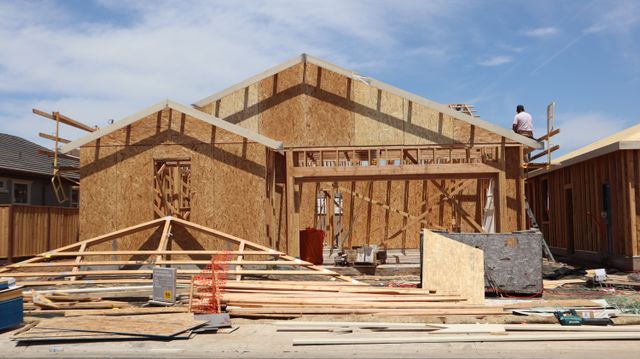
Construction waste is another area where planning can make a difference. More accurate estimating, careful ordering, prefabricated components, responsible material handling, and better coordination between trades can reduce unnecessary waste. These improvements can benefit project budgets while also reducing the volume of usable material discarded during construction.
Material selection will still depend heavily on the individual project. Climate, building use, budget, maintenance expectations, appearance, structural requirements, and local availability all matter. Future construction is therefore less likely to revolve around one “perfect” material and more likely to emphasize better-informed choices.
Homes Will Need to Accommodate Changing Lifestyles
Residential design is being influenced by changes that extend well beyond visual trends. People work, study, shop, exercise, communicate, and entertain differently than they did a generation ago. Homes increasingly need to support several of these activities simultaneously.
This can influence decisions ranging from sound separation and electrical planning to storage and room dimensions. Dedicated home offices may be useful for some households, while others may prefer flexible rooms that can alternate between work, study, guest accommodation, and recreation.
Long-term accessibility is another important consideration. Wider circulation areas, practical bathroom layouts, reduced level changes, and adaptable ground-floor spaces can make homes easier to use as occupants’ circumstances change. Planning these elements during initial construction may be significantly easier than introducing them through major renovations later.
The future home may consequently be less defined by dramatic futuristic features and more by quiet versatility. The best designs may be those that continue working even when the lives inside them change.
Commercial Buildings Will Have to Respond Faster to New Uses
Commercial construction faces a different but related challenge. Businesses can change rapidly, while buildings traditionally change slowly. A property may need to serve a new tenant, accommodate a different workforce, support new equipment, or meet different customer expectations within only a few years.
Adaptable commercial construction can help reduce that mismatch. Utility distribution, mechanical zoning, access points, floor layouts, ceiling systems, and service infrastructure can all influence how easily a property can be reconfigured. Buildings that are difficult to modify may face longer renovation periods whenever their use changes.
Future commercial properties may also place greater emphasis on occupant experience. Natural light, acoustics, indoor air quality, comfortable temperatures, practical circulation, and access to outdoor areas can influence how people experience workplaces, shops, hospitality spaces, and other commercial environments.
These considerations demonstrate why commercial construction cannot focus exclusively on square footage. How efficiently and comfortably that square footage can be used may become increasingly important.
Resilience Will Become Part of Everyday Building Decisions
Weather events, temperature extremes, heavy rainfall, power disruptions, and other environmental pressures are influencing how buildings are planned. Resilience does not necessarily require unusual architecture. Often, it comes from practical decisions about drainage, waterproofing, structural performance, ventilation, backup capability, material durability, and site preparation.
The exact priorities vary considerably by location. A property exposed to intense heat has different requirements from one facing frequent storms, freezing conditions, or wildfire risk. Future construction practices will need to respond more carefully to these regional differences rather than relying on generic solutions.
Maintenance is closely connected to resilience. Buildings that allow important components to be inspected, repaired, and replaced easily are better positioned to remain functional over time. Hiding every service behind inaccessible finishes may create a clean appearance initially but can complicate future repairs.
Thinking about maintenance during construction is therefore another form of future planning. Buildings do not remain new, and designs that acknowledge that reality can perform better throughout their useful lives.
The Future of Construction Is Ultimately About Better Decisions
It is easy to imagine the future of construction as a collection of automated machines, intelligent buildings, and unusual materials. Some of those technologies will certainly influence the industry, but the deeper change may be much simpler: buildings will increasingly be expected to do more, last longer, consume resources more carefully, and adapt more easily.
Commercial and residential construction will continue to involve familiar fundamentals—sound structures, skilled workmanship, appropriate materials, careful coordination, and responsible project management. What is changing is the number of future considerations that must be incorporated into those fundamentals.
A successful building of the coming decades may not look dramatically futuristic from the street. Its advantages may instead become apparent over time: rooms that can change purpose, infrastructure that accepts upgrades, materials that require fewer replacements, systems that use energy more efficiently, and layouts that continue serving occupants as their needs change.
The future of construction, then, is not simply about building something new. It is about creating properties that are prepared for change. When commercial and residential projects are planned with that longer view, today’s construction can remain useful far into tomorrow.