
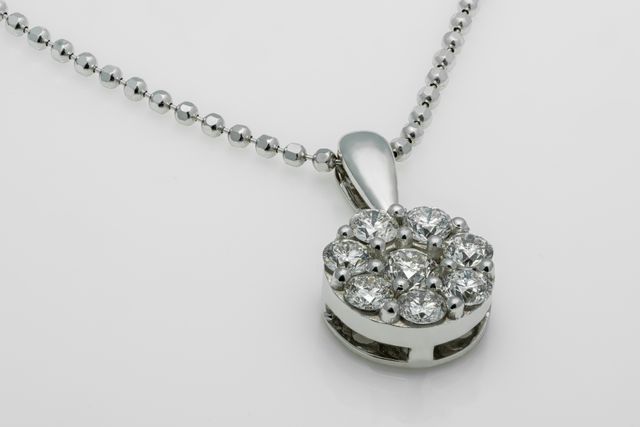
Custom diamond jewelry has always been personal. Unlike choosing a finished piece from a display, the custom process begins with an idea—a particular diamond, setting, shape, proportion, engraving, family connection, or detail that means something to the person who will wear it. Traditionally, turning that idea into jewelry required sketches, conversations, physical samples, and considerable trust in the jeweler’s ability to interpret the vision.
Those fundamentals are not disappearing. What is changing is how easily customers and jewelers can explore ideas before a piece is made. Digital design, realistic visualization, precise manufacturing technology, improved diamond information, and more flexible customization are giving customers a clearer role in the process.
The future of custom diamond jewelry is therefore not simply about creating increasingly complicated designs. It is about making customization more informed, visual, precise, and personal while preserving the craftsmanship that gives fine jewelry its character.
Customization Is Moving Beyond Choosing a Setting
Customization once meant making a relatively limited set of choices: select a diamond, choose a metal, decide on a setting, and perhaps add an engraving. That approach still works for many pieces, but expectations are expanding.
Customers increasingly want details that feel specific to them.
That might involve changing proportions, incorporating an unusual arrangement of stones, adapting an existing design, combining several inspirations, or creating jewelry around a diamond that has already been selected.
Future customization will likely become more flexible at the smaller-detail level.
Instead of choosing between complete designs, customers may be able to adjust individual elements while seeing how those decisions affect the finished piece. Band width, stone orientation, setting height, profile, surface details, and other features can become part of the design conversation.
The result is a more collaborative process. The jeweler still provides technical guidance, but the customer can participate more meaningfully in shaping the final piece.
Digital Design Is Making Ideas Easier to Explore
One of the biggest changes in custom jewelry is happening before any metal is shaped.
Computer-based design allows jewelers to create detailed digital models of rings, pendants, earrings, bracelets, and other pieces. Dimensions can be adjusted, stones repositioned, and structural details refined without physically remaking the piece each time.
For customers, this makes experimentation easier.
Someone considering two different stone arrangements can compare them before production. A band can be made visually narrower or wider, and the height of a setting can be adjusted to see how it changes the overall profile.
This does not mean every digital idea should be manufactured exactly as it appears on a screen.
Jewelry has to function in the physical world. Metal thickness, stone security, wear, comfort, maintenance, and manufacturing limitations all influence whether a design is practical.
Digital design expands what can be explored. Jewelry expertise determines what should actually be made.
Visualization Will Reduce the Guesswork
One challenge of ordering custom jewelry is imagining the finished result from a drawing or verbal description.
More realistic visualization is changing that.
Detailed digital renderings can show proportions, stone placement, metal surfaces, and design features before production begins. As visualization technology improves, customers may be able to view designs from multiple angles and at more realistic scales.
This can make approvals more meaningful.
Instead of agreeing to a technical drawing they may not fully understand, customers can see a closer representation of what the piece is intended to become.
Augmented visualization could take this further. A customer might preview the general appearance of a ring on a hand or compare different design proportions without requiring multiple physical samples.
These tools will not perfectly reproduce how a diamond interacts with real light or how a piece feels when worn. Physical jewelry has qualities a screen cannot completely capture.
But better visualization can close much of the gap between imagination and production.
Artificial Intelligence May Become a Design Assistant
AI is likely to become increasingly visible during the early stages of custom jewelry design.
A customer could describe the type of piece they want, provide several visual references, and explore a range of possible design directions quickly. AI could help identify common elements across those preferences and suggest combinations for further discussion.
For jewelers, this may accelerate early concept development.
Instead of beginning every consultation with a blank page, designers could use AI-generated concepts as rough starting points before refining proportions, stone arrangements, and construction details professionally.
The distinction between inspiration and finished design is important.
A generated image does not prove that a piece can be manufactured safely. AI may create settings that appear beautiful but provide inadequate support for stones or contain proportions that are impractical at jewelry scale.
The jeweler’s role therefore becomes even more important. AI can expand the number of ideas considered, while craftsmanship and technical knowledge determine which ideas can become wearable jewelry.
Personalization Will Become More Subtle
The future of personalized jewelry may move away from obvious customization.
Names, initials, dates, and engraved messages will remain meaningful, but personalization can also be incorporated quietly into the structure of a design.
A hidden detail beneath a center stone might reference an important symbol. The number of smaller diamonds could carry personal meaning. A particular arrangement might represent family members, while an engraving could be positioned where only the wearer sees it.
Custom pieces may also incorporate design influences from architecture, nature, family history, travel, or cultural patterns.
These details do not necessarily need to be recognizable to anyone else.
In fact, that privacy can make the piece more meaningful.
Future custom jewelry may increasingly focus on this kind of personal storytelling, where the value of customization comes from knowing why a particular detail exists rather than making the customization immediately obvious.
Diamond Selection Will Become More Information-Rich
The diamond itself remains central to many custom pieces, and customers now have access to far more information than previous generations of jewelry buyers.
Basic grading characteristics are only the beginning.
Digital imagery, magnified views, measurements, proportions, documentation, and other information can help customers understand individual stones before making a decision.
This can make custom design more closely connected to the specific diamond.
Rather than designing a generic setting and then finding a stone that fits, jewelers can create proportions around the exact dimensions and characteristics of a selected diamond.
That can be particularly useful for stones with less standardized shapes.
More information does not necessarily make diamond selection simpler, however. Customers can easily become overwhelmed by numbers and technical descriptions.
The future jeweler may therefore spend less time simply providing information and more time explaining which information actually matters for the customer’s priorities.
Traceability Will Become Part of the Buying Experience
Customers are increasingly interested in understanding where materials come from and how jewelry reaches the finished stage.
That interest is likely to influence custom jewelry more strongly in the future.
Digital documentation can potentially make information about diamonds and precious metals easier to maintain throughout the supply chain. Customers may have access to clearer records connected to grading, sourcing, manufacturing, or material characteristics.
Traceability does not automatically answer every ethical or environmental question.
Supply chains can be complicated, and a digital record is only as reliable as the information entered into it.
Still, greater documentation can help customers ask more informed questions.
For custom jewelry, this is particularly relevant because buyers are already involved in multiple decisions. Material origin and documentation can become another part of that process rather than information considered only after the design has been finalized.
Lab-Grown and Mined Diamonds Will Expand Design Choices
The growing availability of lab-grown diamonds has added another decision to the custom jewelry process.
Both mined and lab-grown diamonds can be used in custom designs, but customers may approach them with different priorities involving origin, price, rarity, size, personal preference, or long-term meaning.
Custom jewelry is well suited to these choices because the process is already individualized.
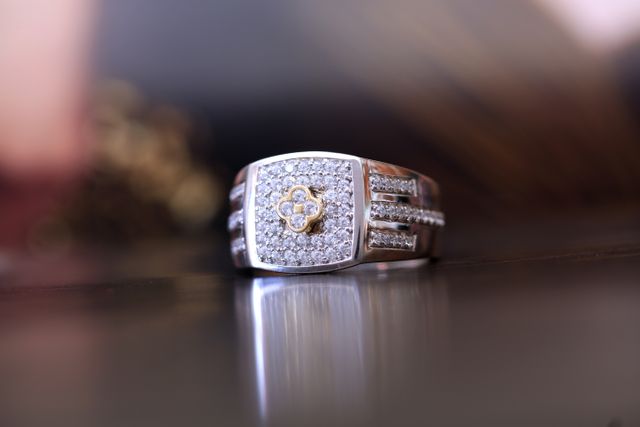
One customer may prioritize a particular natural diamond because of its rarity or personal significance. Another may choose a lab-grown diamond to achieve a different size or design within a particular budget.
The future is unlikely to produce one universal preference.
Instead, custom jewelers will need to explain the differences clearly so customers understand what they are purchasing.
As options expand, transparency becomes more important. Customers should be able to make decisions based on accurate information rather than assumptions about either category.
Precision Technology Will Work Alongside Hand Craftsmanship
Custom jewelry production increasingly combines digital precision with traditional bench skills.
A piece may begin as a computer model, move through digitally assisted manufacturing, and then require substantial hands-on work before it is complete.
Stone setting, finishing, polishing, assembly, inspection, and fine adjustments still depend heavily on skilled craftsmanship.
This combination is likely to define the future of custom jewelry.
Technology is particularly useful where repeatable precision matters. It can help create complex geometry, maintain dimensions, or produce components based closely on an approved digital model.
Human hands remain valuable where judgment and sensitivity matter.
A craftsperson can evaluate how a surface is finishing, how a setting interacts with the actual stone, or whether a small adjustment will improve comfort and appearance.
Future jewelry may therefore become more technologically advanced without looking machine-made. The technology operates behind the scenes while craftsmanship determines the quality people actually see and feel.
Comfort Will Become a Bigger Part of Custom Design
A beautiful piece that is uncomfortable to wear has failed an important part of its purpose.
Future customization is likely to pay greater attention to wearability from the beginning.
For rings, this can involve band proportions, setting height, neighboring fingers, stone orientation, and how the piece interacts with another ring. Earrings need appropriate weight and balance, while bracelets and necklaces need to move naturally without constantly twisting or catching.
Digital modeling can help evaluate some of these relationships before manufacturing.
Customers’ lifestyles can also influence design.
Someone who regularly works with their hands may prefer a different ring profile from someone who prioritizes a dramatic elevated setting. A piece intended for occasional events can make different compromises from jewelry worn every day.
Custom design works best when appearance and use are considered together.
The future may bring increasingly sophisticated technology, but one of its most valuable outcomes could be something very simple: jewelry that feels better to wear.
Heirloom Jewelry Can Gain New Life Through Custom Design
Not every future custom piece will begin with new materials.
Family jewelry often contains diamonds or other stones with significant emotional value even when the original design no longer suits the current owner.
Digital design can make redesigning these pieces easier to visualize.
A customer may be able to see several possible arrangements for an inherited diamond before deciding whether to reset it. Multiple family stones could potentially be incorporated into one piece, or an older design could influence a new one without being reproduced exactly.
This creates a connection between traditional jewelry and modern customization.
Technical evaluation remains necessary because older stones and settings may have wear or damage that is not immediately visible. Not every component can necessarily be reused safely.
When reuse is practical, however, custom design can preserve the part of the jewelry that carries personal meaning while allowing the piece itself to continue into another generation.
Sustainability Will Influence How Jewelry Is Designed
Sustainability discussions in jewelry often focus on sourcing, but design itself can also affect how long a piece remains useful.
Jewelry intended for decades of wear needs to be maintainable.
Settings should allow appropriate inspection and repair. Structural elements need enough material to withstand expected use, and design choices should consider how surfaces and details will age.
Repairability may become a stronger part of future custom design.
Customers may also show greater interest in recycled precious metals, repurposed stones, redesigning existing jewelry, and creating pieces intended to remain relevant beyond short-lived trends.
Longevity is particularly important for custom diamond jewelry because these pieces are often associated with major life events.
A design that can be maintained, repaired, resized where appropriate, and eventually passed on may offer a different kind of sustainability from one created mainly around current fashion.
Virtual Consultations Can Expand Access to Custom Design
Custom jewelry traditionally depends on in-person consultation, but digital communication has expanded the ways customers and designers can work together.
Video consultations, shared digital designs, remote approvals, and secure document exchange can allow more of the process to happen without repeated store visits.
This can be useful when customers live far from the jeweler or when several people involved in a design are in different locations.
The process can become collaborative without everyone occupying the same room.
Physical interaction still has value.
Seeing diamonds in different lighting, comparing proportions directly, checking ring sizing, and examining finished craftsmanship can provide information that digital tools cannot completely reproduce.
The future is therefore likely to combine both approaches.
Digital communication can make custom design more accessible, while physical appointments remain available for decisions that benefit from seeing and handling actual materials.
Technology Will Make Customers More Involved, Not Less
One of the most interesting changes in custom jewelry is that technology can give customers greater involvement without requiring them to become jewelry experts.
Better visualization allows them to comment on proportions. Digital comparisons make design differences easier to understand, while detailed diamond information gives them more opportunity to ask informed questions.
That changes the relationship between jeweler and customer.
The professional is no longer simply presenting a finished idea for approval. The process can become a conversation in which the customer sees how choices affect the piece as it develops.
Professional guidance becomes more important, not less.
More options can create more uncertainty. Someone needs to explain why a delicate-looking setting may need additional support or why a design that appears attractive at large scale needs modification when reduced to the size of a ring.
Technology expands participation. Expertise keeps that participation practical.
The Future Still Depends on Craftsmanship
Custom diamond jewelry may become more digital, more visual, and more information-rich, but its purpose remains deeply personal.
People commission custom jewelry because they want something that represents a relationship, memory, milestone, individual style, or story. Technology can help translate those ideas into physical form, but it cannot determine what makes the piece meaningful to the person wearing it.
AI may generate concepts. Digital modeling can refine dimensions, realistic visualization can make approval easier, and precision manufacturing can help produce complicated forms.
The final piece still needs to be wearable, durable, secure, comfortable, and carefully finished.
That is where craftsmanship continues to matter.
The future of custom diamond jewelry is therefore unlikely to be defined by a choice between traditional craft and modern technology. The more interesting direction is where the two meet: digital tools making it easier to explore what is possible, skilled jewelers determining what works, and customers having more influence over the details that make the finished jewelry distinctly their own.
Custom jewelry has always been about creating something that did not exist before. The tools are changing, but that fundamental idea is likely to remain at the center of what comes next.