
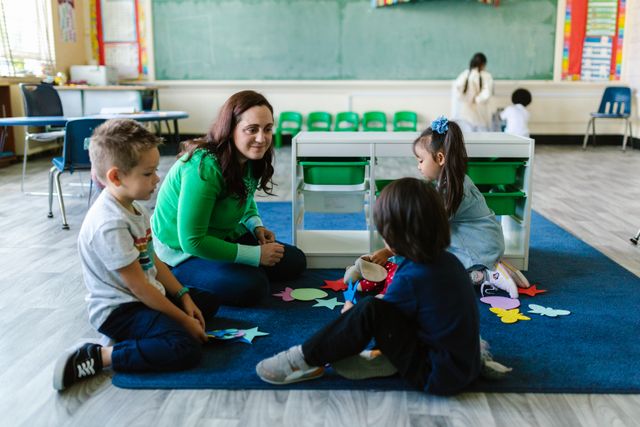
Childcare has never been simply about supervising children while parents are working. A child’s early years are filled with rapid learning, social development, exploration, and relationship-building. At the same time, families need care arrangements that are dependable, understandable, and realistic for modern working lives. Meeting both sets of needs is becoming one of the defining challenges for the next generation of childcare.
The future of childcare and early learning programs is therefore likely to involve more than new classroom technology or updated activities. The bigger change will be in how providers bring together developmentally appropriate learning, play, communication with families, educator support, flexible operations, and environments designed around children’s everyday experiences.
Technology will certainly have a role, but the most successful childcare settings are unlikely to be those that simply become more digital. They will be the ones that use better tools and practices to create more time for meaningful interaction between children, educators, and families.
Early Learning Could Become More Individualized
Children do not develop at exactly the same pace or become interested in the same things at the same time. One child may be fascinated by language and storytelling, while another becomes absorbed in building, movement, music, or exploring how objects work.
Future early learning programs may become better at recognizing these differences without turning childhood into constant assessment.
Educators can observe how children engage with activities and use those observations to introduce appropriate opportunities for exploration. A child’s interest in stacking objects, for example, can lead naturally into conversations about size, balance, counting, and problem-solving.
Individualization does not mean creating an entirely separate curriculum for every child. Children still benefit greatly from shared play, routines, and group experiences.
Instead, it means giving educators enough flexibility to respond to what children demonstrate they are ready and interested to learn.
Play Will Remain Central Even as Technology Expands
The growing presence of technology in education can create the impression that future learning will happen primarily through screens. Early childhood is one area where that assumption deserves caution.
Young children learn extensively through movement, conversation, imitation, experimentation, imaginative play, and direct interaction with their surroundings.
A block can become a building, a bridge, or an imaginary vehicle. A container of water can introduce ideas about volume and cause and effect. Playing with other children creates opportunities to practice communication, sharing, negotiation, and emotional regulation.
Technology may support educators through planning, documentation, communication, and administration, but it should not automatically replace these experiences.
The strongest next-generation childcare settings may actually use technology mostly behind the scenes, allowing educators to spend more time interacting directly with children.
Families Will Expect Clearer Everyday Communication
For parents and caregivers, one of the difficult parts of childcare can be not knowing much about what happens during the hours their child is away.
A brief answer at pickup may not communicate everything that occurred throughout a busy day.
Better communication systems can make information easier to share. Families may receive appropriate updates about activities, routines, important observations, upcoming events, or practical needs without requiring educators to create lengthy individual reports manually.
However, more communication does not automatically mean better communication.
Constant updates can become overwhelming for families and time-consuming for staff. The objective should be sharing information that is useful rather than documenting every minute.
Communication should also work in both directions. Families know their children in ways educators cannot, while educators observe children in social and learning environments that parents may not see.
When those perspectives are shared, care becomes more connected.
Childcare Environments Will Be Designed More Intentionally
The physical environment influences how children interact with a space.
Rooms crowded with materials can become overstimulating, while spaces with limited opportunities for exploration may not hold children’s attention. The arrangement of furniture, learning materials, quiet areas, and active spaces can all affect everyday experiences.
Future childcare design is likely to become more intentional about these relationships.
Children need opportunities for energetic activity as well as places where they can slow down. Materials should be accessible enough to support independence while remaining appropriate for age and safety.
Spaces can also be flexible.
A single area might support storytelling in the morning, collaborative building later, and another activity in the afternoon. Flexible environments allow educators to respond to children’s interests without requiring completely separate rooms for every type of learning.
The goal is to create spaces that quietly support development rather than environments that merely look impressive to adults.
Outdoor Learning Could Become a Bigger Part of the Day
Outdoor time has sometimes been treated as a break from learning. That distinction is increasingly difficult to justify.
Outdoor environments provide opportunities for movement, observation, curiosity, imaginative play, and interaction with natural materials.
Children can notice weather changes, watch insects, explore textures, compare leaves, dig, build, run, balance, and ask questions about what they see around them.
These experiences can connect naturally with language, science, physical development, and social learning.
The next generation of childcare may integrate outdoor experiences more deliberately rather than reserving them for occasional recreation.
That does not require elaborate outdoor facilities. What matters is providing safe, appropriate opportunities for children to explore and interact with environments beyond the classroom.
Social and Emotional Skills Will Receive Greater Attention
Academic preparation matters, but early learning involves much more than recognizing letters, numbers, shapes, and colors.
Children are also learning how to participate in a group.
They encounter frustration, disagreements, waiting, sharing, excitement, disappointment, and countless other social situations. These moments provide opportunities to develop emotional awareness and communication.
Educators can help children learn to express needs, understand feelings, recover from frustration, and interact respectfully with others.
These skills develop gradually and require patience.
Future childcare programs are likely to place greater emphasis on creating emotionally supportive environments rather than treating social development as something separate from learning.
A child who feels secure and understood is in a stronger position to explore, participate, communicate, and build relationships.
Educators Will Need Better Support Behind the Scenes
The quality of childcare depends heavily on the people providing it.
Educators are expected to supervise children, support learning, communicate with families, manage routines, document information, maintain safe environments, and respond to individual needs. Administrative demands can compete with the time they have available for direct interaction.
Smarter systems can help reduce some of this burden.
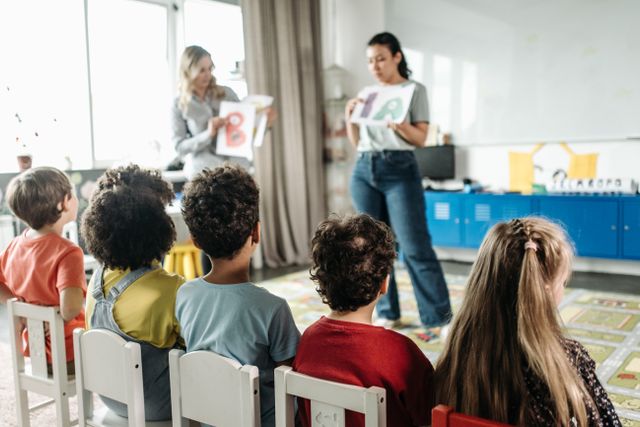
Routine scheduling, attendance, documentation, reminders, and other administrative processes can become more organized. The objective should be giving educators more attention for children rather than simply increasing the amount of information they are expected to record.
Professional development will also remain important.
As understanding of early childhood development grows, educators need opportunities to strengthen their skills and discuss practical challenges.
Supporting educators is not separate from improving childcare. It is one of the most direct ways to improve children’s everyday experiences.
Flexibility Will Matter More to Modern Families
Family schedules have changed.
Traditional working hours still exist, but many parents now manage hybrid work, irregular shifts, multiple jobs, changing schedules, or other responsibilities that do not fit neatly into a single routine.
Childcare providers cannot necessarily accommodate every possible schedule, but the pressure for greater flexibility is likely to continue.
Clear scheduling policies and better capacity planning can help providers understand where flexibility is realistically possible.
Families also benefit from transparency. Knowing operating hours, attendance expectations, closure dates, and procedures for schedule changes makes planning easier.
The challenge is balancing flexibility with stability.
Children often benefit from predictable routines, while childcare providers need consistent staffing and enrollment to operate effectively.
The next generation of childcare will need to find thoughtful ways to serve changing family needs without making children’s daily experiences unnecessarily unpredictable.
Early Learning Could Connect More Closely With Everyday Life
Young children are naturally curious about ordinary things.
Cooking involves measuring, counting, texture, and change. Gardening introduces growth, weather, insects, and responsibility. Cleaning up teaches sorting and cooperation. Storytelling develops language and imagination.
Future early learning may increasingly recognize the educational value already present in everyday experiences.
This approach can make learning feel less like a separate activity that begins when a formal lesson starts.
Educators can introduce questions, vocabulary, counting, comparison, and problem-solving naturally during play and routines.
Children then encounter learning as something connected to the world around them.
That can be especially valuable during early childhood because curiosity often begins with immediate experiences rather than abstract explanations.
Observation Can Guide Learning Without Over-Testing Children
Understanding development is important, but early childhood should not become dominated by formal testing.
Observation offers another way to understand what children are learning.
Educators can notice how a child communicates, approaches problems, interacts with others, uses materials, and responds to different activities.
Over time, these observations can help identify strengths, emerging skills, and areas where additional support may be useful.
Digital tools may make documentation easier, but technology should serve the observation process rather than turn every childhood experience into a data point.
The purpose is to help adults respond appropriately.
Assessment in early childhood is most useful when it improves the learning environment rather than placing unnecessary performance pressure on children.
Stronger Family Partnerships Could Improve Continuity
Children move between home and childcare every day, but those environments should not feel completely disconnected.
Families can provide information about interests, routines, cultural traditions, changes at home, and other factors that may influence a child’s day. Educators can share observations about learning, friendships, behavior, and emerging interests.
This exchange creates continuity.
It can also help prevent misunderstandings. A change noticed by an educator may make more sense when considered alongside information from home, and parents may better understand new behaviors when they know what their child has been exploring in childcare.
Partnership does not mean families and educators will always see everything identically.
It means both sides have respectful ways to communicate and work toward the same basic objective: supporting the child.
Inclusion Will Need to Be Designed Into Everyday Practice
Children enter childcare with different personalities, abilities, languages, family structures, experiences, and support needs.
Inclusive childcare cannot depend entirely on making adjustments after difficulties appear.
Programs can consider accessibility, communication, materials, activities, routines, and physical spaces from the beginning.
Educators also need enough flexibility to recognize that equal treatment does not always mean every child needs exactly the same thing.
Some children may need additional time, different communication methods, quieter spaces, or modifications that allow them to participate comfortably.
Creating inclusive environments benefits more than individual children requiring specific support. It teaches the wider group that people communicate, learn, and participate in different ways.
That is an important lesson in itself.
The Future of Childcare Will Still Be Deeply Human
Technology will undoubtedly become more visible in childcare operations. Communication can become easier, administrative tasks can become faster, and educators may have better tools for organizing observations and planning activities.
But the most important moments in early childhood cannot be automated.
A child still needs an adult who notices when something is wrong. Someone needs to answer the unexpected question, encourage another attempt after frustration, help children resolve a disagreement, listen to an enthusiastic story, and recognize when a quiet child is ready to participate.
That human responsiveness is what gives early learning its meaning.
The next generation of childcare should therefore not be judged by how technologically advanced it appears. A better measure is whether innovation gives educators more capacity to teach and care, gives families greater confidence and connection, and gives children richer opportunities to play, explore, communicate, and grow.
Future childcare may become more personalized, flexible, connected, and intelligently managed. Yet its strongest foundation will remain familiar: trusted relationships, thoughtful environments, meaningful play, supported educators, engaged families, and children who are given the time and space to discover how the world works.